Wide-Temperature Industrial Motherboard FAQ: PCM-B351C 3.5-inch x86 Embedded Mainboard Guide for ITS, EV Charging, Smart Grid, Machine Vision and IoT
Short answer: The YDS TECH PCM-B351C is a fanless, wide-temperature 3.5-inch industrial motherboard built on Intel Atom E38xx or Celeron J1900 processors. It operates from -20°C to +75°C as standard, with an optional -40°C to +85°C wide-temp version, and is designed for low failure rate and 24/7 stable operation in intelligent transportation, EV charging piles, smart grids, machine vision, CNC systems, robotics, face recognition, IoT, AI edge computing and medical equipment platforms.
Product Basics
Q1. What is a wide-temperature industrial motherboard, and what is the PCM-B351C?
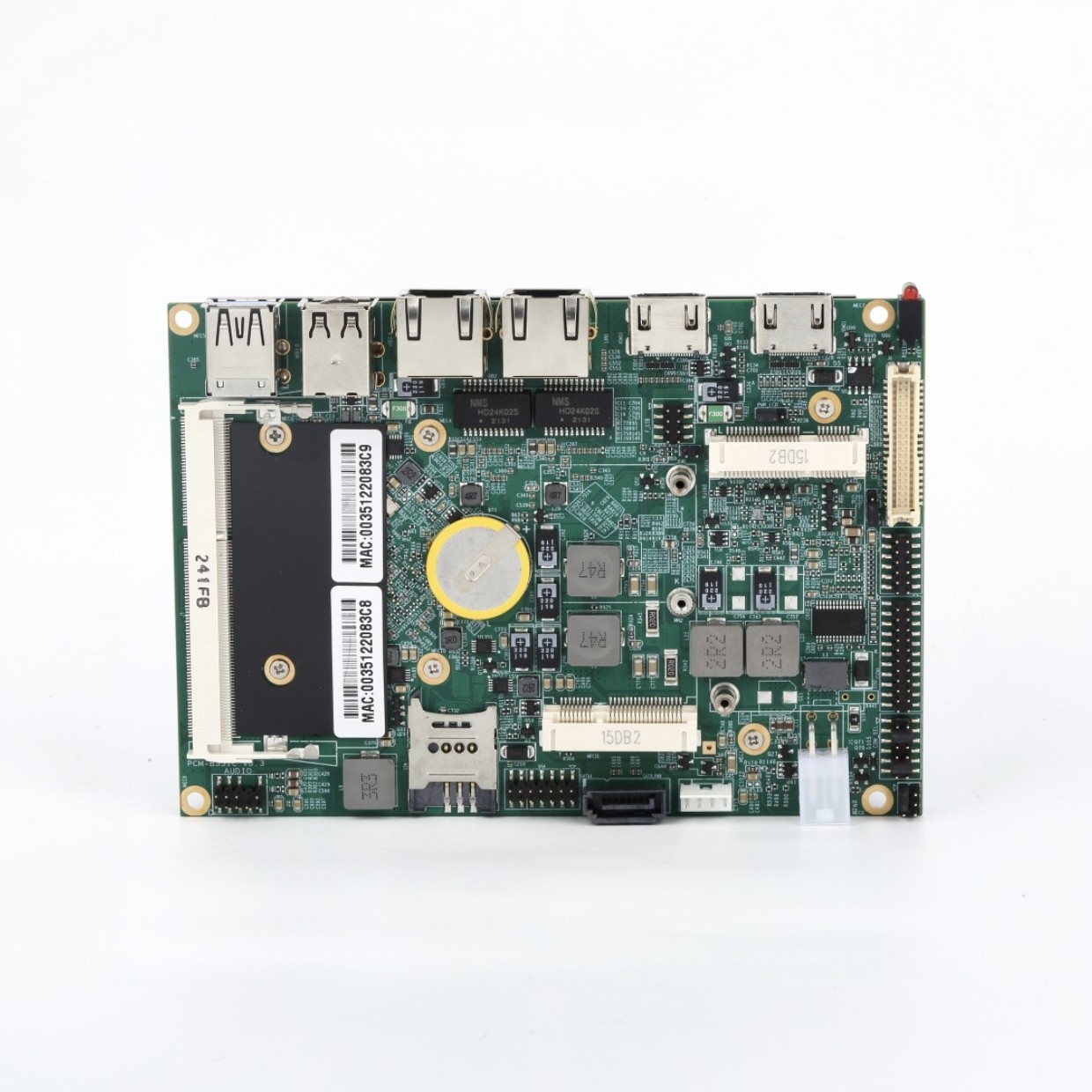
A wide-temperature industrial motherboard is an industrial-grade circuit board designed to run reliably across a much broader temperature range than a standard commercial PC board, in cold and hot industrial environments alike. The YDS TECH PCM-B351C is a 3.5-inch embedded mainboard (also called an industrial PC motherboard or industrial computer motherboard) powered by low-power Intel Atom E38xx series or Celeron J1800/J1900 SoCs, consuming only 5–10W. Its fanless cooling structure makes it a strong choice for embedded devices that must run continuously for years without on-site maintenance.
It can be used either as a stand-alone industrial motherboard or as the core board inside a fanless industrial computer, an industrial panel PC, or a dedicated controller, with hardware selection and engineering support from a professional 3.5-inch industrial motherboard supplier.
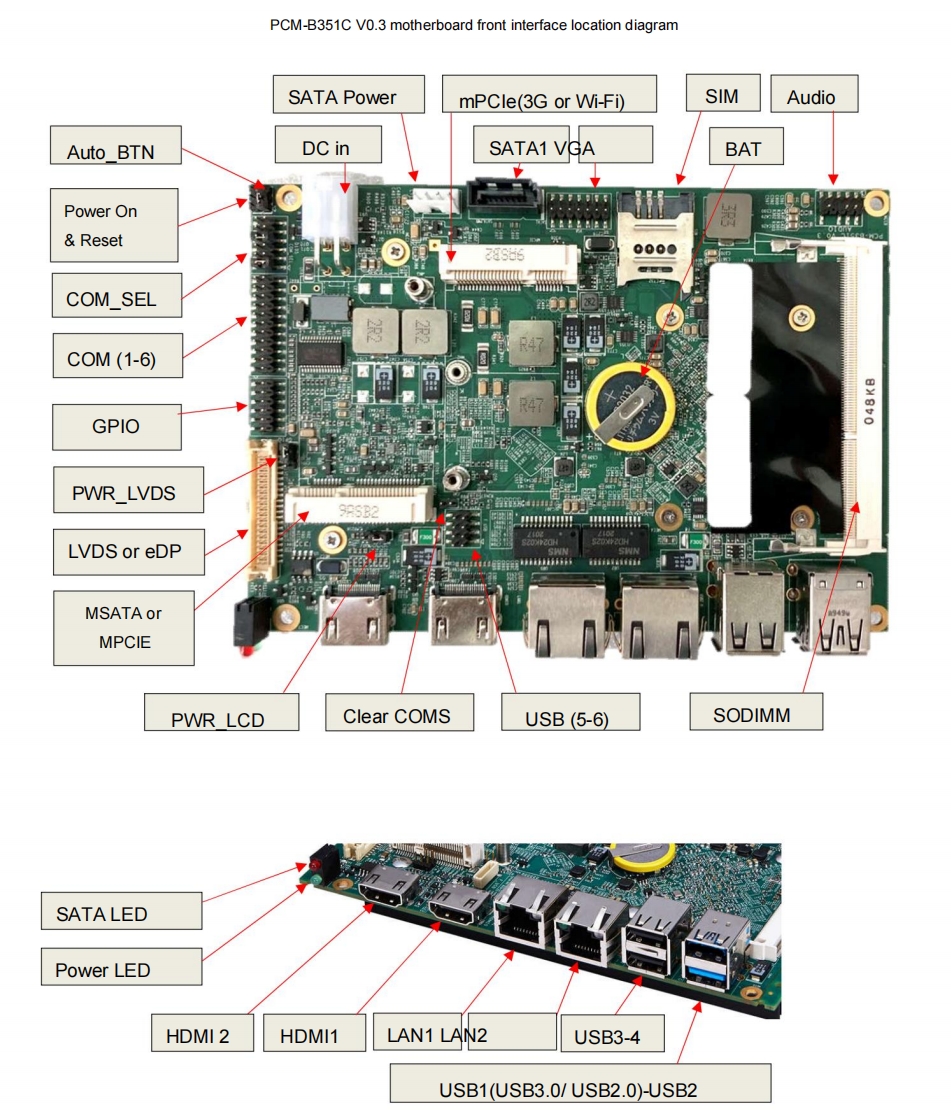
Q2. What are the core specs and I/O of the PCM-B351C embedded mainboard?
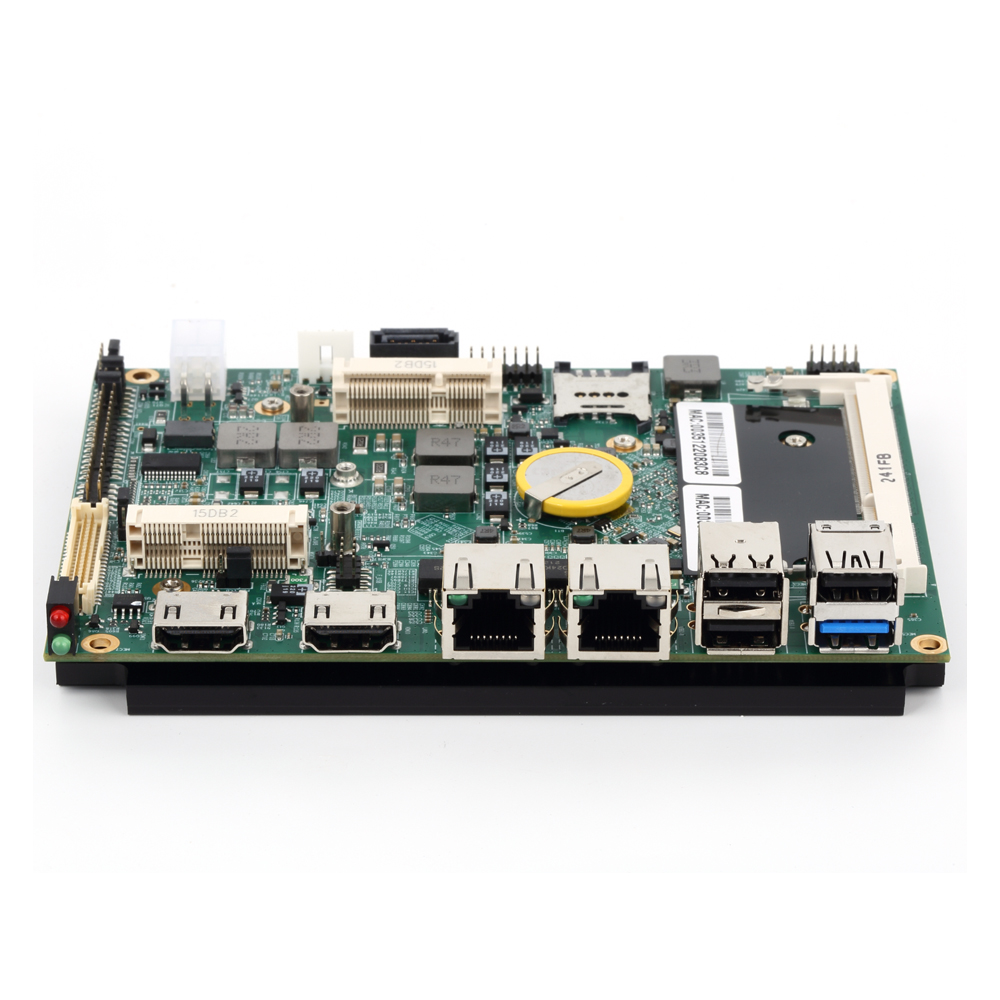
The PCM-B351C measures 146mm × 101mm in a 3.5-inch form factor. Key specifications:
With abundant Ethernet, serial and display interfaces, this industrial PC mainboard connects directly to field sensors, cameras, touch panels and communication modules, reducing the need for external adapter boards.
Q3. What is the operating temperature range, and how does this embedded mainboard resist heat and cold?
Standard operating temperature of the PCM-B351C is -20°C to +75°C; the wide-temp variant (PCM-B351C W-A10-X) reaches -40°C to +85°C.
Heat resistance means the board keeps running without frequent throttling, freezing or going offline inside sun-exposed roadside cabinets, sealed EV charger enclosures or hot workshops beside machinery. Cold resistance handles winter outdoor deployments, high-altitude and cold-region stations, and cold starts in unheated equipment rooms. Combined with industrial-grade components and a fanless structure, this wide-temperature industrial motherboard cuts failure points caused by temperature swings.
Q4. Why does fanless design help achieve a low failure rate and long-term stable operation?
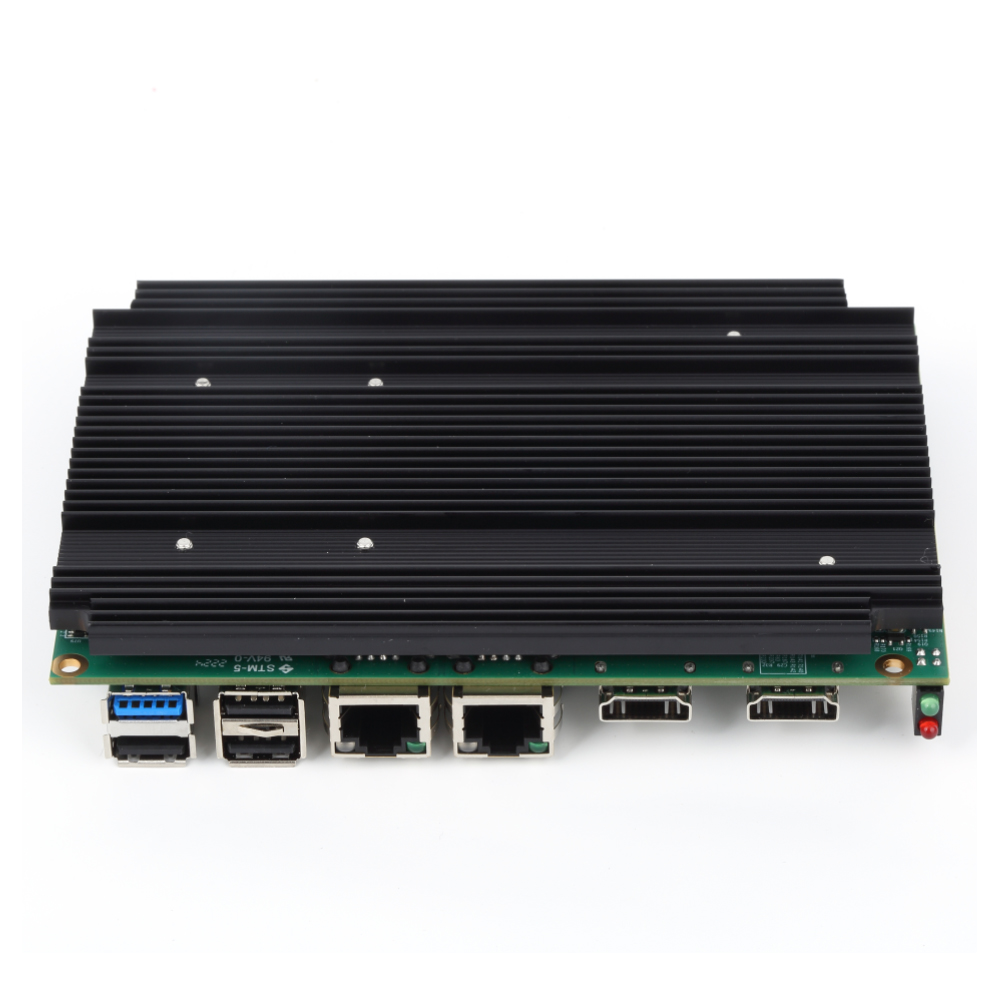
The PCM-B351C uses a fanless cooling solution that relies on the low-power SoC and a heatsink structure. Compared with fan-based industrial PCs, a fanless embedded mainboard removes moving parts, and therefore removes common failure sources such as dust intake, bearing wear and fan stoppage. It suits sites demanding a low failure rate and infrequent on-site visits, supporting 24/7 long-term stable operation. Note that chassis airflow and load should still be evaluated together in the final enclosure design.
Q5. Which operating systems and storage options are supported, and where do I get drivers?
The PCM-B351C supports Windows 7, Windows 10 and Linux, so customers can match their existing software ecosystem. Storage options include mSATA SSD and SATA2.0 drives, fitting the compact storage typical of embedded equipment. Drivers and documentation are available from the YDS TECH product page or by contacting our sales engineers; OEM/ODM customers receive board-level support materials.
Industry Applications
Q6. How do I choose an intelligent transportation system (ITS) motherboard?
An Intelligent Transportation System (ITS) includes traffic signal controllers, roadside capture terminals, variable-message sign controllers and V2X edge nodes, usually housed in outdoor cabinets that get hot in summer and cold in winter, yet must stay online year-round. An ITS motherboard needs wide-temperature tolerance, dual Ethernet, multiple serial ports and reliable uplink. On the PCM-B351C, the two Gigabit ports can connect separately to cameras and the private network, RS232/485 ports interface with signal controllers and detection loops, and the -40°C to +85°C wide-temp version handles day-night and seasonal temperature changes, making it a reliable intelligent transportation motherboard platform.
Q7. Why does an EV charging pile (Electric Vehicle Charging Pile, EVCP) need a dedicated charging mainboard?
EV charging piles (EVCP) are installed in outdoor parking lots, highway service areas and shopping malls; power modules inside the enclosure generate heat, summer ambient temperatures are high, and winter may bring freezing conditions. An EV charger mainboard must run stably across wide temperatures and carry dependable communication (Ethernet, optional 4G) for billing, status reporting and HMI. The PCM-B351C's mPCIe slot supports 4G expansion, dual Ethernet links the billing network to the local display, and HDMI/eDP/LVDS drive the charging screen, serving as a capable EV charging pile motherboard platform.
Q8. What does smart grid monitoring require from a smart grid motherboard?
Smart Grid distribution terminals, ring-main-unit monitoring, feeder-area acquisition and distributed-energy monitoring nodes are widely distributed with a high ratio of unattended sites, requiring 24/7 continuous operation, serial-meter data acquisition and network upload to the master station. A smart grid motherboard emphasizes low failure rate, wide-temperature adaptation and long-term supply commitment. The PCM-B351C offers six serial ports (including RS485), dual Gigabit Ethernet and mPCIe wireless expansion across -20°C to +75°C (optional -40°C to +85°C), making it suitable for outdoor and cabinet-mounted smart grid monitoring equipment.
Q9. Why use a machine vision motherboard in Machine Vision / Computer Vision systems?
In factory inspection, pick-and-place positioning and defect detection, the motherboard must capture camera images reliably, run detection algorithms and communicate with the production-line PLC. A machine vision motherboard typically needs multiple USB/Ethernet ports for industrial cameras, serial ports for the PLC, and a display output for the operator terminal. On the PCM-B351C, dual Gigabit Ethernet and multiple USB ports connect to industrial cameras, RS485/RS232 coordinates with the PLC, and the fanless structure suits continuous line operation — a solid machine vision motherboard for entry-level and routine inspection tasks.
Q10. How do CNC / Numerical Control System (NCS) machines pair an NCS motherboard with an industrial automation motherboard?
A Numerical Control System (NCS) drives motion control and HMI on machine tools, engravers and cutters, while an industrial automation motherboard serves line controllers, PLC expansion stations and data acquisition terminals. Such equipment demands real-time responsiveness, enough serial ports and long-term stable operation. The PCM-B351C can act as the lower-machine interaction and data-processing unit of a CNC system motherboard, or serve as an industrial automation motherboard handling line data acquisition, condition monitoring and HMI; high-real-time motion closed loops should pair with a dedicated motion controller.
Q11. What does robotics demand from a robot controller motherboard?
Inside service robots, inspection robots and AGVs/mobile robots, the robot motherboard handles environment perception, path status display, sensor aggregation and wireless communication in a compact, vibration-prone enclosure. The PCM-B351C's small 146×101mm size, fanless low-power design, 4G expansion and multiple serial ports suit communication relay, HMI and condition-monitoring modules; hard real-time motion loops still require a dedicated motion controller. This makes it a practical robotics motherboard for auxiliary control units.
Q12. Why do face recognition (Face Recognition / Face Detection) devices need a face recognition system motherboard?
Face recognition and face detection gates, access controllers, visitor terminals and attendance devices are deployed in lobbies, campuses, office buildings and outdoor passages, demanding always-on operation, stable display driving and network record upload. A face recognition system motherboard needs reliable video output, network connection and a low failure rate. The PCM-B351C provides HDMI/LVDS/eDP display, dual Gigabit Ethernet and 4G expansion; its fanless structure fits access terminals, making it a dependable face recognition motherboard platform — for heavier algorithm workloads, pair it with a separate AI accelerator module.
Q13. How do I select an IoT system mainboard for Internet of Things terminals?
IoT gateways, acquisition terminals and environment-monitoring nodes aggregate field data and upload it to the cloud over Ethernet or 4G; deployment points are scattered with a large maintenance radius, so low failure rate and wide-temperature adaptation matter. An IoT system mainboard typically needs multiple serial ports, dual Ethernet, wireless expansion and stable operation. The PCM-B351C's six serial ports, dual Gigabit Ethernet, mPCIe 4G expansion and wide-temperature range fit building, campus, warehouse and agricultural acquisition gateways as an IoT system mainboard.
Q14. How do Artificial Intelligence (AI) and Edge Computing deploy on this platform?
Edge Computing processes data near where it is generated to cut backhaul bandwidth. Artificial Intelligence (AI) inference terminals and edge gateways can use an x86 industrial motherboard as the host: data acquisition, protocol conversion and local display run first, then structured results are uploaded. The PCM-B351C works as a lightweight edge computing node and management board for AI terminals; heavier model inference benefits from a separate GPU or NPU acceleration box, for which YDS TECH supplies complete embedded industrial computer solutions.
Q15. What should I watch for when selecting a medical equipment mainboard?
A medical equipment mainboard powers bedside companion units, medical cart terminals, triage screens and equipment data-acquisition modules; priorities are low power draw, long-term stable operation, interface extensibility and continuity of supply. Important note: the finished medical device must complete its own medical compliance certification; the board participates as a hardware platform, and certification responsibility rests with the device manufacturer. The PCM-B351C can serve as a candidate medical equipment mainboard platform, with compliance design completed by the customer.
Selection & Manufacturer
Q16. How do I choose between an x86 motherboard and an embedded industrial computer motherboard? Which category is the PCM-B351C?
An x86 motherboard offers a mature software ecosystem, easy Windows/Linux porting and wide engineer familiarity. Built on Intel x86 architecture, the PCM-B351C is an x86 motherboard and simultaneously an embedded industrial computer motherboard: compact, fanless, wide-temperature, with field-oriented interfaces ready to mount directly inside a custom chassis or device. If your software runs on Windows/Linux and your equipment must embed into a tight space and run for years, this embedded mainboard deserves a top spot on your shortlist.
Q17. What does YDS TECH offer as a leading wide-temperature industrial computer manufacturer and embedded solution provider?
YDS TECH was founded in 1999 and is headquartered in Shenzhen, China. As a high-tech enterprise focused on the R&D, production and sales of industrial computers, its core products carry independent intellectual property rights. The product line covers 2.5-inch motherboards, 3.5-inch motherboards, MINI-ITX motherboards, fanless industrial computers, machine vision systems, mini PCs and industrial panel PCs.
As a wide-temperature industrial computer manufacturer, embedded industrial computer solution provider and x86 industrial computer manufacturer, YDS TECH delivers:
SMT capacity of at least 1.5 million boards per year and whole-machine capacity of at least 100,000 units per year; products are sold domestically and exported to Western Europe, Japan, South Korea and other regions.
Q18. How do I get a quote, samples and technical support from a 3.5-inch industrial motherboard supplier?
If you are looking for a 3.5-inch industrial motherboard supplier, follow these steps:
List field requirements: processor performance, memory, number of Ethernet/serial ports, display interfaces, temperature range, power input and mounting size;
Confirm the environment: outdoor or cabinet-mounted, cabinet temperature, 4G need, OS and software compatibility;
Contact YDS TECH sales engineers for datasheets, samples and a quote; validate a small batch before volume purchase;
For OEM/ODM projects, share your requirement list and our engineering team will assess feasibility.
Contact YDS TECH
YDS TECH welcomes device manufacturers and system integrators in intelligent transportation, EV charging, smart grid, machine vision, CNC systems, robotics, face recognition, IoT, AI and edge computing to inquire about our wide-temperature industrial motherboards, industrial PC mainboards and fanless industrial computer solutions.
#IndustrialMotherboard #EmbeddedMainboard #FanlessPC #3_5inchSBC #x86IndustrialComputer #WideTemperature #EdgeComputing #MachineVision #SmartGrid #EVCharger #ITS #IoT #YDS TECH

 /

 /